Saturday, 5 March 2022

Renault Triber AMT - Reviewed After Driving It For A While

The Renault Triber is an excellent family car thanks to its roomy and functional cabin and remarkable ride quality

Renault created a new segment by rolling out an MPV that sits under the 4-metre mark, priced it aggressively and it is surprising how well Renault has packaged this car. Feels overly spacious for something which is the same size as a compact SUV. On paper, the Renault Triber ticks almost all the boxes. This article discussed how it fares in the real world - as reviewed by MotorBeam.

Previously, all the variants of the Triber we had driven were sporting a manual gearbox. This car came with the AMT, so there is definitely some added convenience on the table. To put things into perspective, we decided on a family trip with a fair amount of luggage. As the COVID situation was more or less under control, it was time to step out of home, but keeping the safety of the family in mind, there were very limited options to choose from. To keep the interaction with others at a minimal, the best option was to rent out a private bungalow and that is exactly what we did.

A favourable destination shouldn’t be more than a few hours’ drive and hence Alibaug was selected and sealed. We were a total of 6 in number (including myself) and the challenge was to ensure that all the luggage fits. There were 2 full-sized suitcases and with the last row of seats upright, we were really not sure if we will manage to squeeze in our baggage. Thankfully, the removable seats came in handy. Since it was just 6 of us, we removed one of the last row seats and parked it at home and bingo, everything fit very easily.

Excellent packaging by Renault makes the Triber extremely practical and value for money

It was time to explore an alternate route to Alibaug. Although it takes much longer, it was worth trying the ferry at least once, just for the experience. The ferry can accommodate about 150 cars in 2 decks, is seamlessly managed and there is an added bonus of soaking in some fresh sea air. Since most of us were locked up at home during these times, the chance to soak up some sun and be outdoors added a much-needed perspective to life. We parked the car on the ferry and enjoyed the sea breeze on the upper deck. After an hour of sailing, we finally drove off from Mandwa Jetty and reached our destination in under an hour’s drive from the jetty.

Alibaug roads are narrow and the Triber offered good manoeuvrability with its light steering. However, with the car fully loaded, we would have loved a little more power on hand. Overtaking needed some planning on these narrow roads. The AMT certainly adds to the convenience of two-pedal driving but is considerably lazy when you need to move up or down the gears in a hurry. Besides the above, there was absolutely nothing to complain about. The ride quality, like most Renault cars, was fabulous, even on really bad roads. The AC in all three rows was a boon and cooled the cabin effectively.

After relaxing for 3 days, it was time to get back. However, we decided to ditch the ferry on our return journey for one simple reason. The journey by road was worth half the time, besides it’s always fun to drive when you have a chance. The Triber has been returning around 14 km/l on the highway and around 11 km/l in the city. The car has only done around 1900 kms on the odometer and we expect the fuel efficiency to improve as the engine gets oiled up with more use. For now, the Triber has been quite impressive with the practicality it offers.

Make your own judgement of the Triber’s drive by booking a test drive at a Group 1 Renault dealer - it’s super easy and SO worth it if you’re unsure if this MPV is the one for you!

.

.

.

Review sourced from https://www.motorbeam.com/

Monday, 17 January 2022

Newly Redesigned Renault Duster Planned To Be Revealed In April


Marking four years in production this year, Renault owned Dacia will reportedly introduce a revised version of the second generation Duster in April as part of an extensive mid-life refresh.

According to France’s L’ Automobile Magazine, the covers will come off towards the end of the month in question with styling reportedly from the all-new Sandero that debuted last year. Allegedly, the update will also be the last major refresh as production is expected to end in 2024 in reported preparation for the production version of the Bigster Concept out the following year.

Despite details being unknown at present, the Renault Duster, according to the publication, is set to receive a new dashboard and infotainment system inside, as well as revised petrol and diesel engines in order to meet Euro 6.d emissions regulations. It will however continue to have the option of four-wheel-drive and also see the EDC dual-clutch gearbox.

The arrival of the facelifted Duster could also be the last hurrah for the Dacia nameplate on the model after the French website, caradisiac.com, reported in 2018 that Renault had decided to stop rebadging it under both marques in certain markets as a way of distinguishing the Dacia marque from its parent. Platform and parts sharing will continue.

In an interview with Automotive News Europe months later, Renault Chief Designer Laurens van den Acker confirmed that the Duster would indeed be the last model to carry both Renault and Dacia badges, before telling Britain’s Autocar not long after that the decision would be to the benefit of both in order for Renault to move upmarket and Dacia to focus on affordability with its own unique identity.

“Cars that are Renault derivatives of Dacias, I want that to stop. I can’t argue with the business sense to do it, because Renaults were expensive for some markets and Dacias were relatively modern cars that were reliable and affordable, so we rebadged them. It helped us gain a foot in those markets. But now we start to sell more cars in markets such as Russia, we will start to differentiate,” van den Acker said.

Once revealed, expect the facelifted Duster to arrive on local shores possibly in 2022 with a line-up of unchanged drivetrains.

.

.

Article from https://joiedevivrevehicles.tumblr.com/post/673692875228348416/newly-redesigned-renault-duster-planned-to-be


Thursday, 28 October 2021

Renault Sandero Stepway Takes On The Urban Jungle


A small, affordable, economical and tough yet comfortable compact urban crossover, the Renault Sandero is an ideal and uncomplicated daily driver engineered with developing markets in mind. A rebadged version of Renault’s Romanian subsidiary Dacia’s high riding Sandero Stepway and its base hatchback sister, the Renault version is virtually indistinguishable bar the French manufacturer’s iconic diamond-like badge.

Introduced in its first generation in 2008, the Stepway is already in its third generation for some markets, but for others, like SA, the second-generation Sandero model is still going strong.

Wide stance compact 

A junior sister model to Renault’s and Dacia’s popular Duster crossover, with a more distinctly urban appeal and less emphasis on off-road ability, the second generation Stepway was first launched at the 2012 Paris Motor Show. A smaller proposition than the Duster, the Stepway is noticeably shorter and more condensed in design. Compact and road-oriented as it may be, the Stepway nevertheless has a rugged SUV-like appeal owing to the black cladding along its lower wheel-arches and sills, faux front skid plate and roof rails.

With similar width and height, and short wheelbase and rear overhang, the Stepway looks as agile and manoeuvrable as it is on the road, and seems to sit on the road with a greater sense of width than its demure dimensions suggest. With its lower cladding, subtly pronounced wheel-arches, broad bonnet and browed grille and headlights, the Stepway’s sense of width is further accentuated, despite compact actual proportions. Meanwhile, the Stepway features discretely bulging rear haunches and an arcing roofline tapering to a concise rear treatment.

A step-up successor

A compact and comparative lightweight at an estimated 1,055kg, the Stepway develops 66 kW at 5,250rpm and 135 Nm at 2,500rpm, which allows decent estimated headline performance figures including 11-seconds 0-100km/h acceleration and approximately 170km/h top speed. Confident and responsive to throttle input from a standstill, the Stepway is progressive through revs and in power and torque delivery. 

Playful yet predictable

The Sandero’s “slingshot” style of operation as a speed build-up while ratios seamlessly alter and revs are held in a high torque range lends the Stepway what seems like a more versatile and confident mid-range for overtaking and incline. Driving the front wheels, the Stepway meanwhile feels more predictable and eager through corners than with the added weight of a front-biased all-wheel-drive system.

Smooth and stable on road for its compact crossover class, the Stepway drives much like a keen and light front-drive hatchback through corners, despite sitting higher off the ground than the regular Dacia Sandero hatchback it is based on. Turning tidily into and leaning slightly through corners, the Stepway’s wide track lends good stability. Meanwhile, the lack of sudden power diversion to the rear makes the Stepway predictable and consistent in road-holding, and with its lightweight and small wheelbase, it is agile and adjustable through corners.

Well-packaged and practical

Refined for its segment, the Stepway is comfortable and settled over most imperfections, with its modest 16” FLEX wheels providing good absorption, durability and help with steering feel. A decidedly urban-oriented crossover, the Stepway should be capable of better than expected but moderate off-road ability, if past experience with other front-drive Renault-Dacia vehicles is to go by. With front-drive, short wheelbase and overhangs, low weight and usefully high 173mm ground clearance the Stepway would be expected to make short work of many dry, unpaved dirt roads.

Tall, compact and with a relatively big glasshouse, the Stepway is well-packaged with good visibility and is pleasant but unpretentious inside, with large uncomplicated controls, buttons and instrumentation, and seems well put together. The driving position is good and accommodates taller drivers, while rear space is decent for its class. Well equipped with useful mod cons, safety and infotainment features, if not advanced high tech equipment, the Stepway meanwhile provides easy boot access and 320-litre volume, which expands to 1,200-litres with its 60/40 split rear seats folded down.

TECHNICAL SPECIFICATIONS

Engine: 3-cylinder turbo

Gearbox: 5-speed manual, front-wheel-drive

Power: 66 kW @5,250rpm

Torque: 135 Nm @2,500rpm

0-100km/h: approximately 11-seconds (estimate)

Top speed: approximately 170km/h (estimate)

Fuel capacity: 50-litres

Length: 4,089mm

Width: 1,994mm

Height: 1,555mm

Wheelbase: 2,589mm

Overhang: F/R: 846/654mm

Kerb Weight: 1,055kg (estimate)

Ground clearance: 173mm

Steering: Power-assisted rack and pinion

Brakes: F/R: Ventilated discs/drums

Tyres: 205/55R16


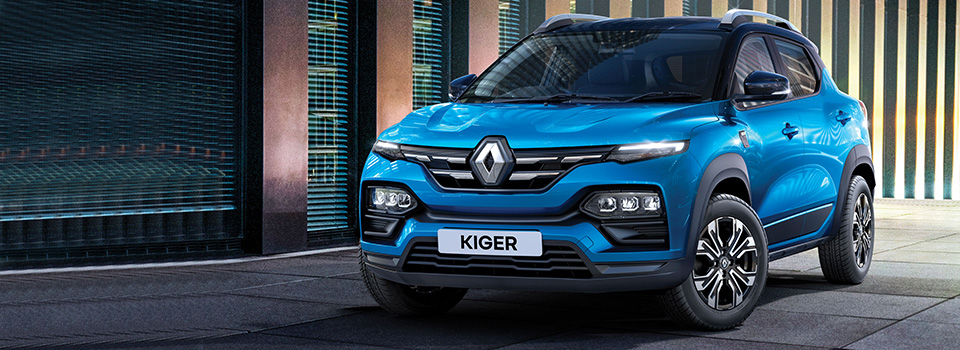
Renault‌ ‌Kiger‌ ‌Vs‌ ‌Nissan‌ ‌Magnite‌ ‌-‌ ‌ Differences‌ ‌And‌ ‌Similarities‌

 The much-awaited Renault Kiger sub-4 meter SUV has finally been launched in SA. 

Renault Kiger from Group 1 Renault

The new Renault Kiger is priced between R199,900 -  R289,900. It is positioned against the likes of the Tata Nexon, Hyundai Venue, Kia Sonet and others in the segment. This is Renault’s first sub-4 meter SUV in India. It will be produced at the Renault-Nissan alliance’s manufacturing plant in Oragadam near Chennai. In fact, Nissan’s sub-4 meter SUV – the Magnite is also produced at the same unit. In this article, we bring you a comparison between the Renault Kiger and the Nissan Magnite.

SAME PLATFORM

The new Kiger and the Magnite are designed and developed on the Renault-Nissan Alliance’s CMF-A modular platform, which was first introduced in the Triber MPV. It is the same platform that underpins the Kwid; however, the Renault-Nissan alliance has tweaked the platform to make it stronger.

SAME ENGINE

Not just platform, Renault Kiger also shares the engine and gearbox options with the Magnite. The SUVs are available with two engine options – a 1.0-litre 3-cylinder naturally-aspirated petrol and a 1.0-litre 3-cylinder turbocharged petrol. While the former is good for 72bhp and 96Nm of torque, the turbocharged engine churns out 99bhp and 160Nm of torque. A 5-speed manual gearbox driving the power to the front wheels come as standard, while a CVT automatic is offered as optional with a turbo engine. The torque drops to 152Nm when paired to a CVT unit.

The only difference is that the Renault Kiger 1.0L version also gets an AMT (Automated Manual Transmission), which is not available with the Nissan Magnite.

DIFFERENT DESIGN AND INTERIOR

The Renault Kiger and the Nissan Magnite are based on the same platform; however, these two SUVs look completely different from each other. The Kiger looks like a bigger Kwid with aggressive design elements. It comes with a more crossover-ish design, while the Magnite has a more rugged boxy design.

The Renault Kiger comes equipped with a signature winged grille with two horizontal slats and split headlamp set-up with LED DRLs on top and a main headlight placed lower down the bumper. Other styling elements include squared-off wheel arches, dual-tone bumper, black plastic cladding and split tail-lamps. It comes with sloping rear glass, roof-integrated spoiler and uniquely styled C-pillar.

The Nissan Magnite was earlier planned under the Datsun nameplate, which is evident from its front grille. It has Datsun’s grille with chrome surround, sharp headlamps, L-shaped LEDs, aggressive lower bumper with fog lamp housing, faux-skid plate and sculpted bumper. Other design highlights include squared-off wheel arches, roof-integrated spoiler, wrap-around tail-lamps and dual-tone lower bumper.

Kiger Interior – The Kiger comes with an all-new cabin inspired by bigger Renault SUVs. It gets a new dashboard and central console, a floating 8-inch touchscreen infotainment system with Android Auto and Apple CarPlay, a digital instrument console, automatic AC, dual glove box, cruise control, around view monitor, etc. The SUV is claimed to offer an impressive boot space of 405-litres. The SUV also gets an air purifier. It gets a 3D sound system by Arkamys with 8 speakers. The system also automatically adjusts the sound volume according to the speed of the vehicle at higher trim levels.

Magnite Interior- The Magnite has a dual-tone black and grey interior scheme with silver treatment. It gets a freestanding touchscreen infotainment system, digital instrument console, leather-wrapped steering wheel, gear lever and handbrake, multi-functional steering wheel, cruise control and air purifier. The top-end variant gets high-end JBL speakers. The SUV also gets a 360-degree camera.

DIMENSIONS

In terms of proportions, the new Kiger is 3,991mm long, 1,750mm wide and 1,600mm tall, and has a wheelbase of 2,500mm. It is 3mm shorter, and 8mm less wide compared to the Magnite; however, the height of the Kiger is 28mm higher than the Magnite. The SUV offers a boot space of 405-litres, which is segment-leading. This is 69-litres higher than the Magnite’s boot space.  

For more information on Renault’s latest vehicles - simply visit the Group 1 Renault website and blog!

.

.

.

Original article source: https://www.indiacarnews.com/

Thursday, 16 September 2021

Cheapest Automatic Renault in SA (2021)

 Looking for a chilled drive on a shoestring? We discuss the cheapest automatic Renault car available in South Africa. 

If you are looking for the cheapest automatic Renault car in SA - sit back, relax and let the car do the work! Automatic cars have much to offer, especially if you live and travel within the confines of the city. Not only are automatic cars easier to drive but they also take the stress out of changing gears continuously, particularly if you crawl through traffic jams on a regular basis. Advances in transmission technology have also led to improvements in fuel efficiency, to the point where some automatic cars are actually more efficient than their manual siblings.

Renault Kwid 1.0 Expression Automatic / Dynamique / Climber


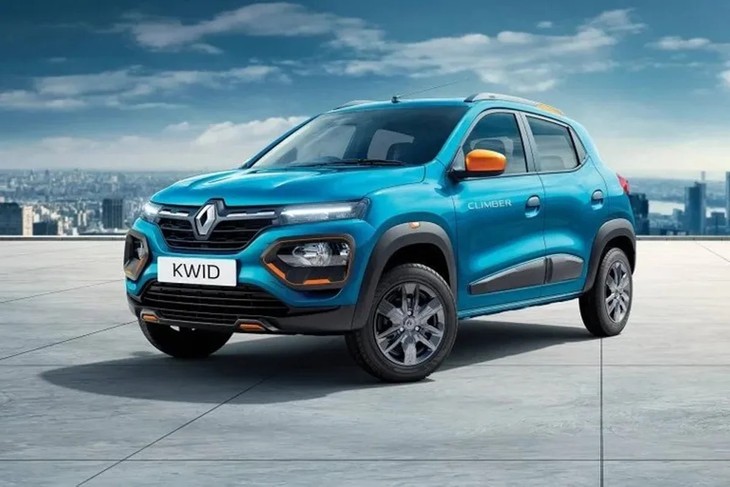
Renault introduced a revamped Kwid to market in 2019 and buyers now have the choice between 3 automatic Kwid derivatives and Renault has priced them all under R200k. The Kwid automatic is offered in either Expression, Dynamique and Climber guise. The Kwid is powered by the familiar 3-cylinder, 1.0-litre petrol engine that offers 50 kW and 91 Nm of torque and is equipped with an Automated Manual Transmission (AMT). Renault claims that the AMT version is more fuel-efficient than the manual with a claimed consumption figure of 4.4 L/100 km, making it the most fuel-efficient (claimed) car on this list.

Key features 
  • Safety: Driver and passenger airbag, ABS
  • Interior: 8-inch touchscreen infotainment system with Android Auto/Apple CarPlay, Bluetooth and USB support
  • Space: Boot space measures 279 litres
  • Service and warranty: 5-year/150 000km warranty
  • Pricing from R181,900 or R2,199pm*

View the currently Renault prices on this and other automatic Renault cars sold in SA.

*Pricing accurate as at August 2021.

.
.
.

Sunday, 29 August 2021

Renault Future Plans - News Cars And New Strategy

 The worldwide chip shortage has delayed the planned 2021 introduction of the new Renault Captur SUV and Clio hatchback in SA, with the vehicles only likely to arrive next year.

Renault’s new Kiger compact crossover is still on track to go on sale here in September to replace the Sandero, while the French brand will also introduce facelifted Triber, Koleos and Duster range in 2021. The seven-seater Triber, which was launched in early 2020 with a normally-aspirated 1.0l engine, will also soon offer the option of a more powerful turbocharged unit.

In future, Renault SA plans to launch the new Arkana compact SUV-coupé while the Megane will be phased out due to dwindling demand for C-segment hatchbacks. The Renault Alaskan one-ton bakkie is scheduled for a local launch late in 2022.

In announcing the new model plans at a media briefing in Johannesburg last week, Jaco Oosthuizen, MD of Renault SA, also spoke about the brand’s new global transformation strategy called “Renaulution”.

Recently revealed by the new CEO of Groupe Renault, Luca de Meo, the strategy will see a focus on brand-building and profitability across the board, through a brand shift from driving volumes to creating brand value.

Oosthuizen called it a profound transformation from the aggressive expansion plan pursued by Carlos Ghosn, the former boss of the Renault-Nissan alliance who has turned fugitive.

There will be greater emphasis on building the individual brands within the Renault Group, as well as strengthening the various facets of the business by addressing inefficiencies.

De Meo also said Renault’s brand has been diluted, so it will need to cut back on the number of products within different ranges by about 30% and could also raise prices for its small passenger cars, or C-segment, by 25%-30%.


About 80% of the group volume will be on three alliance platforms, with engines rationalised from eight to four core families.

De Meo, who took over as Renault CEO in July 2020, said generating cash and restoring profitability was an immediate priority. Renault last year announced plans to cut about 15,000 jobs, shrink production and restructure French plants in a bid to save €2bn.

Renault’s new strategy is accompanied by a new visual identity, with a redesigned logo that lacks the Renault wordmark.

Locally, Renault SA is no longer a joint venture with Renault France. On April 23 2021 the local distributor became a 100% subsidiary of Motus Holdings after the latter bought the remaining 40% stake from the global group.


Check out the current Renault range and stay up to date with new vehicle launches on the Group 1 Renault website.


.

.

.

.

Article from https://www.timeslive.co.za/motoring/


Thursday, 1 July 2021

Renault Duster TechRoad Features Discussed


Faulting or improving on a winning package often rates as something of a daunting task, especially with an offering that seemingly ticks every box with absolute ease. Enter, once again, the Renault Duster for sale.


Never out of demand or in the spotlight as far as La Régie is concerned, it continued to surprise when the TechRoad derivative, fitted with the six-speed EDC gearbox and 1.5 dCi turbodiesel engine, arrived for the weeklong stay last year. Practical, well-kitted out and even trouncing Renault’s claimed fuel consumption figure, it rated, here it comes, as a hard to beat package.


It was therefore an unexpected and very confusing surprise when a glistening white Duster TechRoad arrived for a second seven-day stay, as nothing, at first glance, had seemingly changed on the outside or the inside. In fact, it was initially thought that the flagship Prestige model had been dropped off as the notion of it being the four-wheel-drive Dynamique soon disappeared as evident by the lack of 4WD badges on the front wings and the presence of the EDC box as opposed to the six-speed manual.


On quicker inspection, it was established that the only changes had been the removal of the TechRoad decals from the wings and a switch from red to blue wheel caps with the interior inserts on the cloth seats also being blue instead of red, the same applying to the detailing on the air vents and the Duster embroidered seatbacks.


Contrasted much better by the satin silver front skid plate, roof rails and the 17-inch diamond-cut alloy wheels than its Dune Beige coloured ‘predecessor’, the exterior still outshines the interior.


Arguably the Duster’s biggest black mark, the cabin is otherwise spacious with excellent rear head-and-legroom, the basic but still user-friendly seven-inch MediaNav touchscreen infotainment system and a capacious boot that measures between 478-1 623-litres. Aside from the colour, Renault has opted to keep the TechRoad’s specification and safety sheet unchanged.


As already mentioned, the TechRoad’s continued standout is its drivetrain. Producing 80kW/250Nm, the engine, once past the initial turbo-lag stage, shrugs the 1,276 kg kerb weight off with ease by pulling strong from low down in the rev-range while being matched perfectly to the smooth-shifting dual-clutch box. However, the combination didn’t manage to match the fuel consumption of last year which came to a best of 5.2 L/100 km as opposed to 4.7 L/100 km, which in any book still rates as mind-blowing after 592 km, seven days and with an indicated distance-to-empty of 550 km.


As small as the changes have been, it has not compromised the Duster in any way as it still rated as all the small SUV you will always need.

Renault’s are notoriously reliable and choosing to buy a used Duster is an extraordinarily good idea, because you can find a great quality Renault Duster at Group 1 Renault at a great price!


Article from https://wheelwonderings.postach.io/post/renault-duster-techroad-features-discussed

Friday, 25 June 2021

Renault Koleos Long Term Drive Feedback


After being parked for nearly two months, the Renault Triber finally went back to work with full force in the last month. Since it’s the only small big car in our long-term fleet, it’s our camera team’s first choice for a tracking vehicle or for transporting people and equipment. Not to mention, with the  Triber’s seven-seat layout, we all can also maintain social distance inside the vehicle. 

However, with full camera equipment and three heavy-weight people onboard, the Triber does struggle to gain momentum, especially with the aircon on full blast. However, once you get up to 50-60km/h, it doesn’t feel as ‘powerless’. So, the key is to thrash the motor in each gear and get up to speed really quickly. But this comes at the expense of fuel economy. However, more importantly, this aggressive driving style has affected my 'Eco Scoring’ (shows on the touchscreen) adversely, as my score now stands at 74 / 100. Plus, it’s given me a mediocre 3-star rating in the 'Gear shift’ category. On the upside, in 'Acceleration’, I have scored a 4, and I got a full 5 stars in 'Anticipation’. So, overall, I am happy that I haven’t completely gone down in the Triber’s estimation.  

Test drive the Renault Triber yourself at any Group 1 Renault dealership!


.

.

.

.

Article sourced from https://www.autox.com/long-term-reports

Renault Captur Customer Reviews

Read these customer reviews if you’re in the market for a new or used Renault Captur for sale to get a real idea of whether it’s the car for you.

The car was chosen with some trepidation, but the Renault Captur has proved to be very good in all the major areas. The provision of a covered lower boot area has proved ideal for storing all the basic mechanical and safety equipment needed - keeps it out of sight and secure. Performance is good and has consistently supplied high 4.7l/ 100km and low 3.9l/ 100km.


I am very pleased with the performance and level of comfort in my Captur it comes with a few handy bells and whistles which have helped improve my driving economy.


Lovely car, lots of room, cheap to run & no road tax to pay. Nice looking car too! We went for an ivory & black roof which was very smart and received loads of compliments.


Changed from a sports crossover to this vehicle to give more leg room in the rear without compromising height off the road and to accommodate a partner not enjoying driving a big vehicle. Surprisingly pleased with the comfort, facilities, performance and economy. However, although I have owned 4 previous Renault vehicles, I have not had this one long enough to comment on the reliability.


Reliable with likable performance and features - the Captur for sale could be your next new ride.. If you dare - visit Group 1 Renault today!


.

.

.

Article from https://devotedtorenaultautomobiles.weebly.com/blog/renault-captur-customer-reviews


Saturday, 15 May 2021

The Renault Kwid Discussed By A Woman

 When Renault initially launched the Kwid, it was not expected to be as successful as it was and continues to be. Renault sells an average of 770 Kwids a month making it the 4th most popular passenger car in South Africa. Just a head of it is the Toyota Fortuner, the Volkswagen Polo and of course, taking the number one spot, is the Polo Vivo. 60% of Kwid owners are first-time car buyers and most of them are women between the age of 25-35 years.


The popularity came as surprise to many of us due to the fact that it was deemed a rather unsafe car. But it was no surprise when one looked at the price and what you got for that price. But Renault has now launched its updated Kwid and I am glad to say they have corrected some of the issues many of us had with the Kwid. 

The size has not changed in any way, but Renault claims the new rear axle and wheels improves road holding and therefore safety. I can’t say I felt much of a difference from the outgoing model, it is still a little wobbly on the road, but at least ABS, EBD and two airbags are standard across the range. There is also a seatbelt reminder for driver and passenger.

The engine is unchanged and remains the 1.0-litre Smart Control efficiency (SCe) engine which claims fuel consumption of 4.7l/100 km on the manual and 4.4l/100 km on the automatic.


It has a completely new design which is SUV-inspired and I have to say that I think it looks much better than the previous model. It even has a best-in-class ground clearance of 180 mm which makes ramping those pavements somewhat easier. It sports a new front facia which means a new bumper and a grille with chrome inserts. It boasts integrated headlamps as well as LED floating strips and LED taillights. The Kwid rides on 14-inch wheels.

Where the Renault Kwid features are really where the Kwid shines. When looking at the list, it is easy to forget that this is, in fact, a budget car. The three Renault Kwid trim levels available at Group 1 Renault are the Expression, Dynamique and Climber. I would opt for the Dynamique or Climber because the standard spec is impressive on these models. Some of the highlights are all-around electric windows, air conditioning, rear park sensors, a rear camera, an 8-inch touchscreen infotainment system, Android Auto and Apple CarPlay, and a fast-charge USB port.

But probably one of the most appealing things about the Renault Kwid is that it comes standard with a 1-year Comprehensive Insurance Cover, a 2-Year Service Plan, and a 5-year/150 000km mechanical warranty and a 6-year anti-corrosion warranty. Services take place at 15 000km intervals.

There is no denying this car is great value for money. If you’ve always had to rely on public transport, this car is a sure way to get into the car-buying market without having to break the bank.

PRICING

NEW Renault KWID Expression 1.0-litre SCe           R 157 900

NEW Renault KWID Expression AMT 1.0-litre SCe    R 172 900

NEW Renault KWID Dynamique 1.0-litre SCe           R 171 900

NEW Renault KWID Dynamique AMT 1.0-litre SCe       R 181 900

NEW Renault KWID CLIMBER 1.0-litre SCe            R 182 900

NEW Renault KWID CLIMBER AMT 1.0-litre SCe      R 192 900


.

Article from https://bonjourrenault.wordpress.com/2021/05/15/the-renault-kwid-discussed-by-a-woman/