Tuesday, 12 December 2023

What Does It Cost To Maintain The Renault Clio 5?

If concerns around the costs of maintaining a Renault have you second-guessing and doubting the choices on your shortlist, then fret not. We spoke with Renault to find out what one should expect to pay for Renault services and how readily available their parts are.

You've undoubtedly heard the phrase "Friends don't let friends buy French", a term bandied about by those with a particular disdain for French vehicles. You will often find that those uttering the words are only basing their judgement on second and third-hand information and haven't actually owned a French vehicle. Renault, a French firm, gets a bad rap in South Africa because of some prior mismanagement and, admittedly, sub-par offerings in the past. But this was more than 20 years ago and much has changed. 

The current management of Renault (under the Motus Group) has fared far better and over the last two decades the brand has gone from strength to strength but you may still be wondering if the Renault Clio 5 is expensive to maintain. 

The Renault Clio 5

Available in three trims with a single engine option serving duty in all three, the Renault Clio 5 continues the success story of its predecessor, the Clio 4. This attractive, easy-to-drive hatchback is ideal for the daily grind and will serve a small family just fine. The engine is wonderfully efficient and as a whole, the Clio is a great car to live with.

Renault Clio 5 maintenance

Launched at the beginning of 2022, the Clio 5 is sold with a comprehensive 5-year/150 000 km warranty and the sale sees the vehicle bundled with a 2-year/30 000 km service plan. Service intervals are set at 15 000 km so this service plan will cover you for two services or two years, whichever comes first. As these vehicles are still rather new, you will be able to find a used Renault Clio 5 that still has the balance of the service plan, alleviating some of the maintenance costs for at least the first year of ownership.

Should you happen to be choosing one that has more mileage than the 30 000 km service plan limit, you will be required to pay for these services yourself. The same applies if you're thinking of holding onto your Clio 5 for a little longer to the point where the service plan lapses. In this case, you'll want to know what to expect from a service bill.

We contacted Renault and asked them about the anticipated Renault service costs. Naturally, these prices are only guidelines and prices may vary from dealership to dealership although we were assured that the variances will be minimal.

  • Expect to pay the following:
  • Minor Service: Approx. R2 900
  • Major service (every 5th service): Approx. R8 100

Service parts for both minor and major services are first-pick and readily available while most replacement parts are first-pick as well. You can expect a delay for parts such as body panels, interior trims and some more specialized mechanical components as these may need to be flown in from the factory abroad. General consumables such as brakes and shock absorbers should not pose any problem though.

.

.

.

.

Info from https://www.autotrader.co.za/cars/

Sunday, 26 November 2023

Renault Clio Facelift Revealed With Much To Get Excited About


It’s facelift time for the fifth-generation Renault Clio, which receives a bold new front end and upgraded cabin aimed at keeping it at the sharp end of its dying segment.

But why is it getting a facelift so soon? Well, the current model was revealed abroad back in 2019, but due to various pandemic-related delays, it took until 2022 to reach South African shores. To that end, the facelifted model is anticipated to reach us by late 2024, Renault SA tells us.

Though most of the internals remain as before, the Renault Clio for sale gets a completely redesigned front end that includes a larger grille housing the brand’s new logo as well as slimmer headlights incorporating a new daytime running light signature that runs to the bottom of the bumper.

There are more flavours to choose from too. Renault is introducing a new Esprit Alpine trim grade and this variant, along with the Techno, receives a chiselled aerodynamic blade beneath the grille.

The Alpine model gets Matte Shale Grey treatment for this element as well as the lower edge of the redesigned rear bumper, which is fitted in matte or glossy black in the other variants. The taillights have been freshened up too, with crystal-clear covers and bright outer edges that mirror the lighting pattern at the front.

Renault describes the revised cabin as “more welcoming and cosy” and you’ll also find more sustainable materials here, particularly in the Techno model with its fibre-based fabric used on the seats, door panels and dashboard.

You won’t find any leathers in the cabin, instead, the surfaces are covered in TEP, which is a grained-coated fabric made of bio-sourced and polyester fibres.

Also in keeping with the times is a digitalised cockpit that includes a digital instrument cluster, measuring seven or 10 inches depending on the model, with the latter now also incorporating navigation maps.

Hovering above the centre of the dash you’ll find an Easy Link infotainment system with wireless CarPlay and Android Auto, with a screen size of either 7.0 or 9.3 inches.

There are up to 20 advanced driver assistance systems to assist you with driving and parking, including a 360-degree camera and emergency braking system with cyclist and pedestrian sensors.

On the powertrain front, international models offer a choice between petrol, petrol hybrid and diesel options.

The South African Clio models will likely to stick with the current 1.0-litre turbo petrol that produces 74kW, but for what it’s worth overseas markets also get a normally aspirated three-cylinder as well as a 74kW turbodiesel and a hybrid powertrain that pairs a 36kW electric motor with a normally aspirated, 69kW 1.6-litre petrol engine.

South African prices and specifics for the new Renault Clio will be revealed closer to the launch.

Find a pre-facelift demo or used Renault Clio for sale at a bargain price - thanks to the facelift!


.

.

.


Source: https://www.iol.co.za/motoring/industry-news/

Wednesday, 27 September 2023

2022 Renault Kiger Review

If you are someone looking for your first car or planning to graduate from your generic hatchback to a sub-compact SUV, then you are quite literally spoiled for choice. Today, we have both indigenous and global brands offering exciting options in this space and among them is Renault’s offering the Kiger SUV, which received a number of updates for 2022. We recently drove a 2022 model of the sub-compact SUV and here are our impressions

Exterior & Upgrades:

The Renault Kiger for sale was a good-looking product from the beginning when it launched back in February 2021, with sharp creases and proportionate dimensions. Renault reports that it has produced over 50,000 Kiger compact SUVs since its launch in 2021. 

For the 2022 update, Renault added some tidbits to amp it up. Like the turbo decal stretching across the door panels, a red Renault badge in the centre of the 16-inch machined alloy wheels and an all-new stealth black body colour. The Kiger now also gets a skid plate on the front and a chrome strip on the tailgate for 2022, while the door handles and ORVMs get a blacked-out treatment that gives good contrast.

On the inside, not much has changed visually but there are noteworthy upgrades. The Kiger models on sale now have a wireless charger as standard, across all variants. The grey plastic insert that ran through the middle of the dash now features a sporty red theme. The blacked-out fabric seats feature red stitching as well for 2022 and the quilted texture also looks and feels nice. But the major upgrade in 2022 for the Kiger is the addition of Cruise Control for comfortable highway rides.

Engine & Transmission options:

The 3-cylinder 1.0-litre petrol engine is offered in three different states of tune out of which two are turbocharged and the top of the line even offers a CVT gearbox, and for the budget-conscious, there is also an AMT transmission on offer. Overall, the Kiger offers 20 variants spread between the Rs 6 to 10.6 lakh band that are intended to suit a wide spectrum of buyers. 

Amidst the fierce competition, the Kiger is relying on its modern styling and European design characteristics to woo buyers. But what about its driving and handling characteristics? Do they live up to the standards that we have come to expect from a Renault SUV since the Duster? 

Performance & handling:

The 1.0-litre turbocharged engine produces 73 kW of power and 152 Nm of torque with manual transmission and 160 Nm of torque with the X-Tronic CVT. Whereas, the 1 litre Energy engine produces 53 KW of power and 96 Nm of torque. The turbocharged version that we drove, felt peppy and did not feel out of breath under any circumstance. However, you can notice the typical rubber band effect of the CVT transmission. But it is nothing that one cannot get used to. Renault also claims that the Kiger offers fuel efficiency of 20.5 km to the litre, however, during our test ride, we were able to churn out a little over 18 km/l as per the onboard calculator. 

The Kiger offers three driving modes: eco, normal and sport. While the eco and normal modes are distinct in their own right it is the sport mode where the Kiger really comes alive and performs noticeably well. Even the CVT's response becomes much quicker than it does in normal or eco mode. We also took the Kiger over some rough rural patches and the compact SUV easily tackled bad roads and narrow streets thanks to its modest dimensions and the McPherson strut suspension set-up on the front. However, when going over potholes the suspension does get quite vocal, to the point where passengers could get uncomfortable. Overall, for a car that weighs under 1,500 kilograms, the Kiger is both capable and fun to drive and a lot of the fun factor can be attributed to its turbocharged engine.

Interior: 

We would like to make a special mention of the all-black interior theme which was a personal favourite. As it gives the cabin a sporty appeal and will be easy to maintain in the long run. The digital instrument cluster hosts a lot of information and even changes its configuration depending on the driving mode that has been selected. The central 8-inch infotainment touchscreen has a simple UI and is fairly easy to operate. It is not going to wow you but it will not even disappoint. The audio quality from the 8-speaker system is sufficient and the wireless charger works even with your phone cover on. At the rear, the Kiger offers 405 litres of boot space that easily accommodates our production equipment and several bags. In simple terms, two large bags or three medium-sized bags would fit flush inside the boot. 

However no car is perfect and the Kiger is no exception, while technically it is a five-seater, during long drives, only 4 adults will feel comfortable sitting at the back. Those who appreciate a good fit and finish might end up feeling underwhelmed as there is a noticeable lack of finish in some areas of the interior packaging.


.

.

.

.

Review from https://www.tumblr.com/joiedevivrevehicles/729444432427024384/2022-renault-kiger-review?source=share

Saturday, 19 August 2023

Why The Renault Kwid Is A Great Option For New Drivers

There is lots to like about Renault’s Kwid. Here we examine just how good this car is for first-time drivers.

Renault’s Kwid was launched in late 2016 as an entry-level car and it has achieved amazing sales success since then. In the past two-and-a-half years, Kwid’s sales figures have seen it rule the entry-level class, with monthly figures often topping the 1 000 unit level - the Renault Kwid’s price certainly has a definitive influence here.

Since its initial launch, the Kwid addressed one of the major safety criticisms levelled at it by journalists by introducing ABS braking. This system prevents wheel lock-up during very hard or emergency braking. ABS braking is now fitted to all Kwids on sale from April 2019. This system brings it into line with its price competitors.

Renault targets first-time buyers with its Kwid.

At the launch of the Automated Manual Transmission version of the Kwid in mid-2018, Renault South Africa management referred to a concerted campaign to target first-time buyers of the little hatchback.

The Renault product specialist then told journalists, many of whom had criticised the Kwid, that the company had specifically targeted young female first-time buyers with the car, many of whom had had to rely on taxi transportation until signing up for the first taste of car ownership.

Free Insurance is a huge incentive.

One of the master strokes of the Renault first-time-buyer campaign was to offer free insurance coverage for the Kwid for the first year of ownership. This scheme won Renault many sales and has since been imitated by other brands, that offered the same one-year free insurance scheme with its models.

So what’s good about the Renault Kwid?

  1. The Price. The Renault Kwid remains one of the cheapest new cars on sale in South Africa. The base model, Kwid Life, is R188 999 (the updated price for July 2023).
  2. Looks. Out of all the small new cars on sale here around the R200 000 price bracket, the Kwid has plenty of personality in terms of looks. Renault is aware that it looks like a scaled-down SUV, and has even started referring to it as such in recent media releases.
  3. Connectivity. The Kwid comes with a 7-inch touchscreen with smartphone mirroring, compatible with Apple Car Play and Android Auto.
  4. Ground clearance. The Kwid is good over speed bumps and potholes.
  5. Fuel consumption. The Kwid sips fuel at the rate of 5,5 to 6.0 litres/100 km
  6. Free insurance for a year when buying a brand new Kwid.

Verdict


Many buyers are attracted to a car by its looks first and foremost, and the “scaled-down SUV” appearance of the Kwid is something that rival manufacturers should be aware of. Here in South Africa, SUVs have strong appeal.

The second big factor is the smart dashboard layout with its touch screen. Renault has definitely put one over the competition here, recognising that young people often value their cyber connectivity more than they value personalised mobility! Lastly, the attractive price of the Renault Kwid is a big selling point.


.
.
.
.
Info shared from https://www.autotrader.co.za/cars/news-and-advice/

Sunday, 16 July 2023

Long-Term Review Of The Renault Kangoo Van

The Kangoo has always stood for value in the small van sector, but does the latest version also offer car-like comfort and refinement? 


The Kangoo is our reigning champion in the small van market - offering space for all gear, comfort on big journeys, and functionality as a mobile office when needed.

For this review, we opted for the most powerful diesel option in the Kangoo range, which produces 84.3 kW – a natural choice given how much equipment I carry with me, and the vast mileage I cover in my role as a roving photographer.

Across almost 23,000 km of driving it’s been a solid performer, providing a smooth power delivery and helping to keep my running costs in check. Indeed, my current test economy of 20.6 km/l is close to the Kangoo’s official figure of 21.4 km/l. 

True, there have been a few instances where I’ve wanted even more power. When I’ve loaded my van to the brim with camera gear and want to overtake slower traffic on a country road, I have to really think about how much space I need to pull the manoeuvre off. If there was a diesel option with a tad more power, I wouldn’t have to.

I’m pleased, though, that when I’m trundling along, the Kangoo’s diesel engine settles into a quiet background thrum easily. Engine noise is quieter than in the Citroën Berlingo van I ran previously, although the Berlingo does compensate by letting in slightly less road noise.
Ads by 
Choosing the right van, then, is a balancing act. But, all things considered, I think my model, especially at the Renault Kangoo price, gets most things right most of the time.


.
.
​.

Sourced from: https://www.whatcar.com/news/renault-kangoo-van-long-term-test/n25613 

Sunday, 25 June 2023

3 Automatic Renault Cars You Can Buy In South Africa For Less Than R250K

 A car with an automatic transmission (AT) can make driving a lot easier, especially in built-up and heavy traffic areas – which has led to vehicles that offer an automatic gearbox becoming very popular in South Africa.

According to data from AutoTrader, there has been a considerable shift from manual cars to automatic transmissions, reported News24. The data showed that of the 13% of prospective car buyers using the gearbox type search filter, 82% selected the automatic filter.

Additionally, in August 2020, manual transmission cars made up 54% of the used car market listings, while automatic transmission listings comprised 46%. But by August 2022, the automatic share had risen to 55%, while the share of manual cars dropped to 45%, AutoTrader CEO George Mienie told News24.

In the past, manual transmissions were known to get better fuel economy than their automatic counterparts – which, in the early days, could use up to 10% more fuel than their manual equivalent. However, modern developments in automatic transmissions and variations have meant that this is longer the case.

Among the technological advancements of automatic transmissions came the automated manual transmission (AMT) – also called a semi-automatic gearbox because it marries the clutch and gears of a manual with a set of actuators, sensors, processors and pneumatics.

This type of transmission is used in most cars on this list. Using an AMT system, the driver does not have to do anything, as the system operates the clutch and selects the right gear for the driving situation – although the driver can elect to use the gears manually.

While operating like an automatic, on paper, an AMT gearbox offers the same, if not better fuel-saving benefits as a traditional stick shift transmission.

Unfortunately, automatics often cost thousands of rands more than their manual counterparts. However, the good news is that there are three affordable cars offered by Renault with the option of an automatic transmission.

The 3 automatic Renault vehicles you can buy in South Africa right now for under R250,000 are the Renault Kiwd, Renault Triber and Renault Kiger.

Renault Kwid 1.0 Climber Auto

  • Renault Kwid auto price: R214,999
  • Fuel consumption: 4.9 L/100km

Renault Triber 1.0 Intens Auto


Renault Kiger 1.0 Zen auto

  • Renault Kiger auto price: R247,999
  • Fuel consumption: 5.2 L/100km

If you want to test drive any auto Renault models - simply book a Kwid, Kiger or Triber test drive!

.

.

.

.

Info shared from https://bonjourrenault.wordpress.com/2023/06/25/3-automatic-renault-cars-you-can-buy-in-south-africa-for-less-than-r250k/

Sunday, 28 May 2023

Updated Renault Captur SUV Offers An Enticing Package


The growth the compact SUV segment has shown over the last few years is quite astonishing.

A landscape that was once ruled by sedans and hatchbacks is these days flooded with little SUVs in various crossover spin-offs. And as more carmakers either enter or up their game in this space, the more difficult it gets for any of the contenders to really stand out from the crowd.

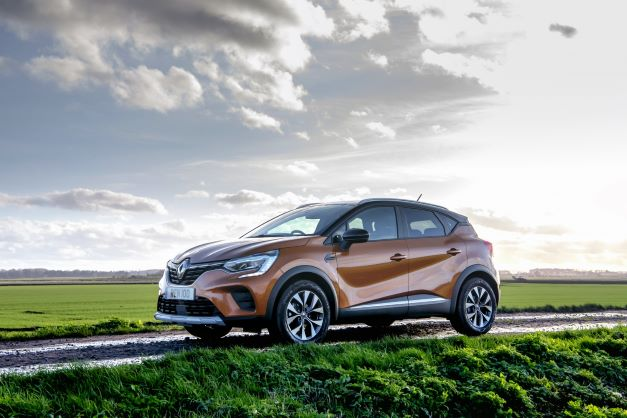
One compact SUV that aces this challenge is the new Renault Captur. Long overdue to various hold-ups spanning from Covid to chip shortages, the French carmaker could finally roll out the Captur locally last month.

The new Captur manages to hold its own through some sexy styling, a very nice little turbo engine and heaps of driving pleasure.

Now we have been treated to have a Renault Captur in top-spec Intens guise as a house guest for the next three months to see how it holds up to life’s little challenges over an extended period.

Renault Captur put to the test

We will use our long-term Captur for the purposes most buyers will, like commuting to the office, doing school runs, stopping for groceries and using it to get out of the city for the odd weekend.

During its stay with us, we will get to see how comfortable it is, if it has enough space for everyone and everything we tend to fit and very importantly, how fuel efficient it is

What we really like is the powertrain. The Renault Captur is powered by a 1.3-litre turbo-petrol engine which produces a very generous 113 kW of power and 270 Nm of torque sent to the front wheels via a seven-speed EDC double-clutch gearbox.

Renault claims it will sprint from 0 to 100 km/h in 9.6 seconds with a top whack of 196km/h and we have no reason to doubt them.

Renault also claims that it will sip 6.6 litres per 100 km, which we will put to the test over the course of the Captur’s stay with us.

These smaller turbo mills can sometimes tend to return disappointing fuel consumption numbers in hectic city traffic.

A pleasure to drive

What do have enjoyed in its first week with us is its driveability. The power, combined with a smooth gearbox and great handling almost wants to bring out the racer in you.

It feels planted on the road and once the more comfortable you get behind the steering wheel, the more you plant to throw it into corners. Not during the school run of course…

The Renault Captur’s styling has a generous amount of typical French flair to it. On the exterior, it features distinctive C-shaped LED headlights and taillights that extend into the tailgate, 17-inch alloy wheels and bi-colour paintwork.

Inside the Captur feels well-built with a nice combination of materials. Soft-touch materials, satin chrome trimmings, elegant plastics, a black and grey seat design in cloth and leatherette and a leather steering wheel combine to form a very pleasant cabin.

Advanced gear lever

Reserved for the Renault Captur Intens is a floating console which houses the e-shifter. The floating design frees up space below for wireless smartphone charging, whereas the e-shifter itself only requires the palm of your hand to change the gear selector without having to press any buttons.

A 9.3-touchscreen vertical infotainment screen takes centre stage on the dashboard and features Renault’s Easy Link multimedia system which includes voice recognition, smartphone connectivity and navigation.

Other creature comforts include a digital instrument cluster and heated steering wheel, which will come in handy over the winter months.

The Renault Captur Intens comes with a comprehensive set of safety features which include: six airbags, electronic stability control, front and rear parking sensors and reverse camera, blind sport warning, traffic sign recognition, lane departure warning and blind spot monitoring.

The Renault Captur price includes a five-year/150 000 km warranty and a 3-year/45 000 km service plan.


.
.
.

Source: https://www.citizen.co.za/motoring/

Tuesday, 25 April 2023

First Time Driving The Renault Kiger - What You’re Wondering

The Renault Kiger has been around for over a year now, and it quickly crossed the 50,000 production milestone at their Chennai facility. To celebrate this milestone, we’ll tell you everything you want to know about the new Kiger SUV.

In India, part of the update is the new Metal Mustard exterior paint with a blacked-out roof. And for this 50,000 units production milestone, Renault has also introduced a handsome-looking Stealth Black paint scheme. There’s also a new chrome-finished tailgate insert and stylish-looking skid plate at the front and the subtle yet intriguing Turbo decal on the side. Also, the diamond-cut alloy wheels now have red finished hub caps making them stand out.


What’s new inside and what's on the feature list
Getting inside, the refreshed Kiger flaunts the new red accents running across the dashboard, providing a nice flavour to the all-black cabin. Apart from that, the latest Kiger models also have this quilted emboss finish on the seats. Adding to the sportiness are contrast red stitches on the seats, around the gear lever, and on the steering wheel. Also part of the update is a wireless charger placed down the centre console. It also gets cruise control now. Moreover, the updated Kiger comes with a PM2.5 air filter as standard across the range.

The Kiger continues to offer clever storage options all around the cabin – 29 litres, to be exact. Even the boot capacity of 405 litres is best-in-segment, and it can be extended up to 879 litres by folding down the 60:40 split rear seats. Then, the all-digital driver’s display is configurable depending on the driving mode you are in. In the Eco, you get a green screen, in Normal it is blue, and in Sport mode, it’s red with more information on display, like bhp and Nm bars, and a G-metre as well.

As for the seats, they are fairly comfortable with good bolster support and you get height adjustment as well. Even space at the back is more than ample for two. It has sufficient leg room with a seating position set for my height, it's big on headroom as well, thanks to the tall roof and the flat floor further helps passengers in sitting quite comfortably.

What we have here is the top-spec, loaded to the gills, RXZ version. You get all the modern-day useful features that you’d expect from this segment. This includes LED DRLs and headlamps, LED tail lights, a stylish roof-mounted spoiler, 16-inch diamond-cut alloy wheels, functional roof rails, blacked-out door handles, and a shark-fin antenna.

Inside the chrome and piano-black finished cabin, you get a leather-wrapped steering wheel, contrast red stitches on upholstery, cruise control, wireless charger, a digital driver’s display with drive mode skins, 3D surround Arkamys sound system with six speakers, automatic AC, rear defogger, electric folding ORVMs, dual glove box with the lower one being a cooled glove box, ambient lighting, rear AC vents, steering mounted controls, height adjustable driver’s seat, rear wipers, push-button start with smartcard key, rear armrest with cup holders, and split seats. You also get an eight-inch floating touchscreen with USB connectivity and a rearview camera.

As for safety, there are four airbags in the RXZ trim with dual front airbags as standard. Then, there are rear parking sensors, ABS with EBD, speed-sensing door locks, and ISOFIX as well. And if you are wondering, the Renault Kiger has already bagged four stars in the Global NCAP crash tests.

What’s it like to drive?
The updated Kiger continues to be offered with two engine options. The 1.0-litre non-turbo version makes 53 kW and 96Nm. It's either available with a five-speed manual or an AMT. What we are driving is the 1.0-litre turbocharged engine which has an output of 74 kW. It’s available with a manual which has 160Nm, while the automatic is a CVT with a torque figure of 152Nm.

No changes have been made to the engine or gearbox for this update. So, the three-cylinder engine in the Kiger continues to feel refined, sans those irksome vibrations associated with a three-pot engine. The power delivery is smooth and predictable, even the turbo lag is nicely compensated by the refined and user-friendly CVT transmission. No to mention, the bothersome rubber band effect of the usual CVT is fairly absent here.

You also get three driving modes, where the performance is subdued to extract more fuel efficiency in the Eco mode. Meanwhile, throttle response is slightly sharper in Sport. Hence, Normal mode would do just fine for your everyday need. No changes to steering and suspension either, so the Kiger is still one happy runabout, be it in the city, or out on the highway.

How does it compare and what’s the price?
With this update, the new Kiger has refreshed its appeal by offering more in an already well-rounded package. It looks handsome, has loads of features, is safe and equally good to drive with multiple powertrain choices. And it’s even priced competitively than other sub-four metre SUVs. 

.
.
.
.
Review shared from 
https://devotedtorenaultautomobiles.weebly.com/blog/first-time-driving-the-renault-kiger-what-youre-wondering

Sunday, 12 March 2023

Renault Clio vs VW Polo TSI - The Compact Crossover Comparison


The hatchback segment is one that has been hotly contested for as long as we can remember. Two of the most popular options, the locally built Volkswagen Polo and the Renault Clio, have been sitting at the top of the list since they were introduced. The Clio recently celebrated its 30th anniversary and, in that time, it has, like the Polo, carved out a decent share of the market. Both cars have been updated and seem to offer much in terms of value. The below comparison of the Polo and Clio price, specs, features and performance sees how they stack up against each other.

Design:

I love how different both cars approach design in their own unique way. In terms of visual appeal, the Clio is definitely the most attractive of the two. The Polo seems to be more subtle in its design approach, more clinical, and less flamboyant and that’s perfectly okay. What I do like is the LED light elements on both cars. The Clio features these large C-shaped lights whereas the Polo has adopted an LED light bar that runs across the grille. Both look extremely eye-catching when the sun goes down.

The rear of both cars also adopts LED technology within the light clusters. The Polo features the new VW badge and the new placement of the POLO designation just under it. The Clio features a slightly curved roofline which gives it a sleek silhouette. The Polo, however, stays true to form. Again, both look good in their own right but the Clio embodies that iconic French flair in its design, making it a bit more visually entertaining than the Polo.

Interior:

This is where drivers will be spending most of their time so the interior is very important. Both cars' interiors have come a long way since I started interacting with the Clio and Polo a few years ago. Cheap, bland and basic are not words associated with either car when it comes to the interior composition.

The Polo offers an ergonomically designed facia complete with a now-standard digital instrument cluster. I also rather enjoyed the 8.0-inch infotainment system which offers wireless app connection like Apple CarPlay and Android Auto.

The latest Clio also features an updated interior complete with a new 9.3” Easy Link multimedia touch screen that draws your eye. It also offers Apple CarPlay and Android Auto but it’s, unfortunately, not wireless.

The interior trim is decent, as are the comfort levels of the seats. The Clio and Polo offer decent interior space with ample storage space. The Polo offers a luggage capacity of around 351 litres. The Clio, however, offers around 40 litres more than that though at 391. I also prefer Clio’s climate controls which are dials with a digital element compared to the Polo’s more analogue offering. It is also worth mentioning that Volkswagen offers only USB-C ports, so make sure that you have an adapter.

Under the bonnet:

The Volkswagen and the Renault make use of a 3-cylinder 1.0-litre turbocharged motor. I found both motors to be equally eager and both cars made use of a 5-speed manual gearbox. The Polo seen here develops around 85kW and 200Nm of torque while the Clio offers up to 74kW and 160Nm of torque. This deficiency can be felt when pulling away as the Clio tends to suffer more from turbo-lag than the Polo. Once both are up to speed they tend to cruise rather decently. In-gear acceleration is good and the Clio even offers various driving modes.

One downside to the Renault Clio is that it’s only available in five-speed manual form, whereas Polo buyers can choose between a manual and (as per our test car) a DSG dual-clutch auto.

When it comes to fuel consumption, which is an important consideration these days, you will be happy to know that the Polo has a claimed consumption of around 5.4l/100km. The Clio claims 5.7l/100km. We averaged around 6.5l/100km with both vehicles during our time. I guess that fuel consumption comes down to many external factors such as your specific driving style, traffic and how far you’re going.

Verdict

Although the cars are equally impressive, there is just something about the Volkswagen Polo that appeals to us just a bit more. We guess it’s the bit more power and the “it feels like home” when one climbs into the driver's seat. The Clio is great and offers its own charm. Truth be told, we would recommend looking at both.

It is worth mentioning that the Renault Clio price is R349 900 in top-spec form which means you’re getting a lot of car for the money. The mid-spec 85kW DSG Polo Life costs R374 500, although you can have the 70kW manual model for R353 600.

Check out the Renault Clio model lineup pricing.

The Polo does have a better service plan, though, at three years or 45 000km versus the Clio’s two-year/30 000 plan, although the French contender does fight back with a longer warranty, at 5 years/150 000km versus three-years/120 000km.

.

.

.

.

Comparison compiled by and shared on https://www.iol.co.za/motoring/

Monday, 27 February 2023

Current Renault Duster Is The Perfect City SUV


This segment is alive with a host of rivals, including the Ford EcoSport, Haval Jolion, Kia Seltos, but if you want a crossover that can fit an average family and their luggage in comfort, and hang out with proper off-roaders, the 2023 Renault Duster with all-four traction is it.

But it’s not the impressive 4WD version on the test. This is the 1.5dCi Intens, a front-wheel drive-only range-topper crammed with the latest tech. For starters, you don’t need to lock or unlock the vehicle using its card key to enter. You simply approach and “click” all doors are unlocked; a walk away and another ‘click’ signals full automatic lock-up.

It’s got new design 17-inch wheels, silver roof rails and prominent front and rear skid plates alongside updated front and rear LED lights and daytime running lights. The new look avoids the dainty, city fashionista look so prevalent in the segment and refines the tough-cookie style, which speaks volumes about its go-anywhere capabilities.

The interior is touched up with a modern-looking dashboard and new fabrics adorn the seats. The rear seats are split-foldable to create more loading space and there are numerous storage nooks around the dash to hide oddments from prying eyes. New technology includes a colourful 8-inch multimedia display that also plugs into mobile device features through Apple CarPlay and Android Auto. Voice commands are also possible.

All 2023 Renault Duster models are powered by a 1.5l four-cylinder turbo-diesel. In this Intens guise, it kicks out 80kW and 250Nm and powers the front wheels only via a six-speed automatic transmission. The 4WD model gets an extra 10Nm.

It’s an eager unit that fires off the Duster from a standstill to 100km/h in 11.9 seconds and maintains a spirited boil to reach a top speed of 169km/h. It has great fuel economy too, returning an exceptional 5.6l/100km average on the test, making it a good choice if you rack up mileage, and it’s assisted by conveniences such as a speed limiter and cruise control.

The body is well-controlled at higher speeds and it never felt hampered by its front-drive configuration to corner fast and surely. You also have no fear of potholes, manholes or speed humps in city surroundings, thanks to a higher-than-average ground clearance.

It’s the same results of poise and stability when driven on gravel roads;  you can confidently wander off into the wilderness better than most crossovers because it has the same chunky set of wheels and articulation and the same 30-degree approach/34 departure angled bumpers as the 4WD model, and it clears the same obstacles thanks to a similar 210mm ride height

The 10Nm torque deficit shouldn’t disadvantage the Intens’ ability to clamber up some average steep gradients, but you need to curb your enthusiasm before tackling some obstacles. Slippery surfaces and deep ditches are strictly for the 4WD model.

The Duster Zen 4WD model is my pick, and further supporting my view is that its traction system is part-time, meaning it’s a front-wheel drive under normal circumstances, and you call on the all-wheel traction only when the need arises. While it has a marginal fuel consumption penalty, it sells for R8,000 less than the front-wheel drive Intens.

But if you live in the city and have the occasional need for gravel driving, the Duster Intens is perfectly good and acceptable in that respect. You gain an automatic gearbox (4WD is manual only), painted skid-plates, keyless entry and lumbar support, all the things required to navigate the concrete jungles comfortably.

Renault Duster 1.5dCi Intens technical specifications

ENGINE:

  • Type: Four-cylinder turbo-diesel
  • Capacity: 1.5l
  • Power: 80kW
  • Torque: 250Nm

TRANSMISSION: Type: Six-speed auto

DRIVETRAIN: Front-wheel drive

PERFORMANCE:

  • Top speed: 169km/h
  • 0-100km/h: 11.9 sec
  • Fuel Consumption: 4.8l/100km (claimed), 5.6l/100km (as tested)
  • Emissions: 189g/km

STANDARD FEATURES:

Electric windows, LED daytime driving running lights, multifunction steering-wheel controls, electric mirrors, keyless entry, Bluetooth, USB port, cloth upholstery, lumbar support, climate control, cruise control, drive modes, park distance control, rear blind-spot assist, ABS, stability control, brake assist, and four airbags

COST:

  • Warranty: Five years/150,000km
  • Service plan: Three years/Unlimited mileage
  • Price: R404,999 

VERDICT: A practical family crossover

.

.

.

Review shared by https://bonjourrenault.wordpress.com/2023/02/27/current-renault-duster-is-the-perfect-city-suv/

Thursday, 22 December 2022

Renault Koleos Review Results: An Attractive Package


The Koleos badge is one you might not see too often, but the SUV nameplate made a comeback in South Africa - affixed to the boot lid of a vehicle that appears to have more ingredients for success in the competitive SUV middle ground, where Rav4, Tiguan and Tucson rule the roost.

For starters, the Renault Koleos for sale is a far more attractive vehicle than its croissant-mimicking predecessor, featuring clean, taut lines that are likely to appeal to buyers in this segment.

Measuring 4,673mm, the Koleos is the longest vehicle in the Rav4 class, and it shows in its ultra-generous interior space and competitive boot space. Despite this, it is priced at the lower end of the segment, ranging from R499 900 for the 2.5 Expression CVT to R549 900 for the 2.5 Dynamique CVT and R599 900 for the 2.5 Dynamique CVT with all-wheel-drive.

The latter was the version IOL Motoring spent a week with, but said they would agree that the front-wheel-driven Dynamique offered the best value in the range - unless, of course, you intend on doing some medium-level off-roading, in which case the Nissan sourced all-wheel drive system will do the trick for you. This AWD system offers multiple modes, these being 2WD for efficient open-road cruising, 4WD Auto that varies the front-to-rear power split based on the impending conditions, and 4WD Lock mode, which allows a 50:50 split for rougher terrain encountered below 40km/h. This vehicle’s ground clearance is also close to best in class, at 110mm.

There’s only one engine and gearbox combination available in the Koleos variants available and this comes in the form of Nissan’s proven, 2.5-litre normally aspirated engine, mated to an X-Tronic continuously variable transmission.

The engine produces 126kW and 233Nm, which is competitive at the base end of the segment, and the performance it delivers is adequate performance. 

The gearbox is not as bad as you might expect as, unlike older-generation CVTs, this one has built-in steps (seven in this case) that make it behave and feel more like an automatic.

As is the case with many European vehicles, the suspension set-up in the Koleos is not really suited to South African roads, as it feels too firm for a vehicle of this nature, which is really more about hauling families in comfort than carving through corners. The road holding is neat enough though.

The interior, as mentioned, is quite family-friendly - it’s comfortable and spacious (as well as safe thanks to its five-star EuroNCAP rating), while equipment levels are generous.

To that effect, all models come with dual-zone climate control as well as cruise control, auto headlights and windscreen wipers, rear parking sensors and a touchscreen infotainment system with Apple CarPlay and Android Auto functionality.

The Dynamique adds leather seats with electric adjustment, blindspot detection, front and side parking sensors, reverse camera, keyless start and a larger tablet-style touch-screen that now incorporates the climate control functions. This however detracts rather than adds to the user-friendliness of the system as simple functions now need to be controlled via the screen. Renault did at least include a ‘swipe up’ shortcut to climate functions on the screen, but it’s still nowhere near as convenient as good old-fashioned rotary dials.

The interior design and materials are of good quality and the atmosphere is lifted by a mood lighting system that offers a multitude of hues, from blue to violet and red, even yellow.

VERDICT

Renault’s Koleos has evolved into a far more attractive package that in both size and spec terms offers a lot of vehicle for the money, regardless of which version you choose.

Find a pre-owned Koleos model to get the fantastic SUV at a bargain price.
.
.
.

Review shared by https://wheelwonderings.postach.io/post/renault-koleos-review-results-an-attractive-package

Wednesday, 23 November 2022

All About The Renault Captur’s Interior Design And Technology

The second-generation Renault Captur has kerb appeal in spades, with the deeply scalloped sides and floating roof

Infotainment and connectivity

The Captur’s ‘Smart Cockpit’ layout features a 7-inch multimedia touch screen, standard on Play and Iconic models, while S Edition versions get a 9.3-inch portrait format. Both give access to Renault’s Easy Link connected system. Charging times, heating and ventilation (while the car is plugged in) can be scheduled via the Easy Link touchscreen, or via the MY Renault app.

Connected services and apps, including Android Auto and Apple CarPlay integration, are provided as standard across the range. The car’s 4G connectivity supports services such as an emergency call function that activates automatically in the event of an accident. It also means that the platform is always up to date, thanks to automatic updates from the likes of Google, TomTom and Coyote.

Interior focus

Soft-touch plastics and satin finishes are used throughout, while the front seats have a new architecture. The steering wheel has a smaller diameter allowing an improved view of the instrument display, as well as re-designed backlit controls add to the ambience.

One of the highlights of the interior is the new ‘flying console’ available as part of the optional Comfort Pack for S Edition models. This elevated centre console incorporates the ‘E-Shifter’ gear selector on top, additional storage space and a wireless phone charger below.

Other creature comforts and convenience features (depending on the trim level) include an auto-dimming rearview mirror, rear privacy glass, high-beam assist, and an ambient lighting pack. The latter allows drivers to choose from eight different LED colours that provide a calming glow. A reconfigurable instrument cluster is available as an option for S Edition models. It allows the driver to choose their preferred set-up, including turn-by-turn navigation instructions displayed directly in front of them. When combined with the 9.3-inch infotainment display it gives the Captur one of the largest screen combinations in its class.

Size-wise, the overall length of the car has increased by 110mm, providing a spot with more room for occupants and their luggage. Rear legroom has been boosted by 17mm, thanks in part to re-designed front seats that also benefit from slimmer, comma-shaped headrests to improve visibility.

The 60/40 rear seatbacks can fold down completely to give an almost completely flat load floor of 1.57m – 110mm more than in the previous Captur. In addition, a movable floor allows the boot space to be configured either for maximum space or to create a flat load entrance with hidden storage beneath the floor. Boot capacity has been boosted by 81 litres to 536 litres, thanks to a sliding rear bench trading rear legroom for luggage space.

The front door storage compartments can each accommodate a 1.5-litre water bottle. A sliding front centre armrest conceals a fairly deep storage area. The glove box has an unusual pull-out tray-like design instead of a hinged door. There are also two cupholders in the front console area plus two in the back, integrated into the central armrest.

Some sound ideas

Compared with the audio system in the previous Captur, there are now nine speakers rather than seven, with two additional tweeters in the rear doors. There’s also a new compact subwoofer – the ‘Fresh Air Speaker’ (FCA). Fitted to a Renault for the first time, the FCA offers bass frequencies without the need for a conventional large enclosure. Instead, the sound is channelled to the passenger compartment through a patented duct system built into the car’s structure.

Integrated into the side of the boot is the optional Bose audio system, causing no reduction in load space. Occupants can tailor the audio experience to their tastes, switching from a neutral, studio-like setting to a more immersive sound. In addition, Dynamic Speed Compensation automatically adjusts volume and equalisation on the move, hence a seamless listening experience without the driver needing to constantly make adjustments.

Advanced driver assistance systems

In the ADAS department, the Captur incorporates a suite of technologies, including adaptive cruise control, traffic and motorway assistance, blind-spot warning, lane departure warning, automatic emergency braking and traffic sign recognition. In addition, front and rear parking sensors, a rear-view camera and a 360-degree camera with a bird’s eye view all help when reversing into some tight spaces.

On balance, the Captur looks great with plenty of interior charm. It also comes with a generous list of standard equipment, clever safety technology and an intuitive infotainment system. The upmarket textiles cover the door-card inserts, headliner, windscreen pillars and dashboard inlay. Most of the surfaces are soft to the touch with all the usual scratchy plastics hidden at ankle level. The seats not only look good but are comfy for short distances too. The sliding rear seat bench also helps this SUV stand out in a crowded marketplace. 

Check out the Renault Captur’s specs too.

.

.

.

Info shared by https://www.just-auto.com/

Sunday, 9 October 2022

New Renault Clio Is In SA - What Does It Have To Offer?


The
new Renault Clio was  launched in South Africa February 2022 and while the fifth-generation model doesn’t look radically different on the outside, it is totally new beneath the skin as it now sits on the updated CMF-B platform.

The fifth-generation Renault Clio comes in three flavours with the Life trim grade kicking things, the mid-range Zen and the flagship Intens.

All models are powered by the new-generation 1.0-litre direct injection turbopetrol engine, which produces 74kW and 160Nm. Curiously though, at a time when many motorists are going the auto route, the only gearbox option at launch is a five-speed manual unit.

In terms of standard spec, the entry-level Life model ships with 16-inch steel wheels with Flex caps designed to look like alloys, as well as LED headlights and taillights. Cabin features include cruise control, electric mirrors, front electric windows, multi-function steering wheel and a Easy Link 7.0-inch infotainment system with six speaker and Android Auto / Apple CarPlay connectivity. Safety kit comes in the form of four airbags, Emergency Brake Assist and ESC stability control.

Over and above all that, the Zen model grade adds satnav, height-adjustable driver’s seat, Comfort seats with reinforced side support, synthetic stitched leather steering wheel trim as well as black and anthracite 3D Mountain upholstery.

The Intens adds 16-inch alloy wheels, exterior chrome pack, Black Mosiac interior decor, ambient interior lighting, electric handbrake, rear electric windows, wireless phone charging, high-beam assist, Lane Departure Warning and a centre console with storage and armrest.

Find a little extra change for the Option Pack and you also get an upgraded 9.3-inch infotainment system, front and rear parking sensors, reverse camera and 17-inch Viva Stella diamond cut alloy wheels.

All models are sold with a five-year/150 000km mechanical warranty and two-year/30 000km service plan.

.

.
.
Article shared by https://wheelwonderings.postach.io/post/new-renault-clio-is-in-sa-what-does-it-have-to-offer

Tuesday, 13 September 2022

2022 Renault Kwid versus Suzuki Alto - Interior Comparison

Alto vs Renault Kwid - two major hatchbacks make up the entry-level hatchback class, one of which is more than 20 years old. The Suzuki Alto and the Renault Kwid, which have fuel-efficient engines, automated gearboxes, and a plethora of additional features in the smallest possible packages, are the two most competitive models.

Sales data reveals that Suzuki sells more Altos than Renault, but with the new Alto due to be introduced in India, the rivalry will be much more fierce. In order to examine how the 2022 Renault Kwid and  Suzuki Alto compare, let’s look at their designs, measurements, and interior features.

Renault Kwid Design and Dimension vs Alto

The third-generation Suzuki Alto features an entirely new design and, for the first time, is built on the HEARTECT platform that also supports the Baleno, Ertiga, XL-6, and other Maruti Suzuki cars. The Alto receives a significant design makeover, according to spy photos so far, and borrows features from the recently released Celerio.

The 2022 Alto has updated bumpers, grilles, and headlights, and its total proportions are slightly larger than those of the current generation, giving it a roomier interior than the previous model.

The latest Kwid has a lofty posture and a more SUV-like styling. The Kwid’s squared wheel arches, high-set front end, and DRLs above the headlights give the hatchback a commanding stance on the road. The Kwid has a wheelbase of 2,422mm and measures 3,731mm in length, 1,579mm in width, and 1,474mm in height. When it comes to ground clearance, the Kwid matches SUVs at 184mm.

Alto vs Renault Kwid: Exterior and interior features

Among other things, the new Suzuki Alto will have steel wheels, LED DRLs and headlights, and LED taillights. The interior of the new Alto has been updated, and it now includes a touchscreen infotainment system, a rearview camera, manual air conditioning, power windows, dual airbags, ABS with EBD, a seatbelt reminder, and ISOFIX child seat anchors.

Alloy wheels, an 8.0-inch infotainment system with Apple CarPlay and Android Auto, voice recognition, navigation, a reverse camera and sensors, a digital instrument cluster, dual airbags, ABS with EBD, ISOFIX child seat anchors, and more distinguish the Renault Kwid from the competition.

Alto vs Renault Kwid: Engine specifications

Both cars will come with a choice between a smaller 800cc petrol engine and a larger 1.0-litre engine. Additionally, manual and AMT gearbox options will be available for the 2022 Suzuki Alto and Renault Kwid. The new 1.0-litre engine that now drives the S-Presso will be added to the 2022 Alto in addition to the smaller gasoline engine it already has.

.

.

.

Comparison compiled by DNP India